
Try to plan the first week of October 2026. Three shows you have been tracking since spring are all supposed to start. One of them does, right on the top of its Japanese broadcast block. One starts on October 25 and puts three episodes online at once, and it is not a season. The third starts October 2, runs twelve episodes, and then does not come back until April 2027. Same week. Same “Fall 2026” label on three different apps.
None of that is a secret and none of it is anybody lying. It is what happens when a release date stops being the only fact that matters. The Apothecary Diaries Season 3 is a 24-episode season that the streaming plan splits into two cours, one premiering in October 2026 and the second in April 2027. My Happy Marriage is returning as three special episodes, all on October 25, all on the same day, and almost every database on the internet will file that under “Season 3.” Meanwhile The Exiled Heavy Knight Knows How to Game the System started a two-cour run back in July that never paused, so it is a Summer 2026 anime still handing you new episodes at the end of the year.
The dates were all published. They are just not the same kind of fact, and almost nothing in the way we track anime makes you sort them. Start with format, then release model, then platform and region, then the date, and the calendar stops being a wall of noise. Here is how the current system actually works, and what to do about it.

The Season Is a Label, Not a Date
“Fall 2026” sounds like a container. It is not. It is a rough marketing category that anime sites assign so people have something to browse, and inside it the actual release structures are all over the place. Some titles premiere in week one, some in week three, some in week six, and some were already airing when the season officially began.
Crunchyroll’s own Fall 2026 lineup post, published September 15, shows how much variety sits behind one announcement. The lineup mixes new premieres, returning seasons, and shows that started months earlier and simply keep rolling. A Wild Last Boss Appeared! Season 2 lands with an early premiere on September 26, before fall has technically started. Red River has been running since July and is still listed, because that is the season it will finish in. Meanwhile Cyberpunk: Edgerunners Season 2 is a Netflix drop with a single October date and no broadcast slot at all.
So a season is a label attached to a marketing quarter, not a fact about when a show started. The moment you accept that, the first question changes from “when does it premiere?” to “what kind of release is this?” Everything else follows from the answer.
Split Cours Cut Every Season in Half
A cour is Japanese broadcast shorthand for roughly three months, and a standard season is about twelve episodes, or one cour. A two-cour season is about 24, which is a lot to ask a show to sustain weekly. The industry’s answer has been to split it: twelve episodes in the fall, twelve in the spring, with a real gap between.
The Apothecary Diaries Season 3 is the cleanest example available. It is a full 24-episode season, and the announced plan is cour 1 in October 2026, cour 2 in April 2027. That is a six-month hole in the middle of a story, which means the premiere date is only half the information you need. The second half is a separate event with a month attached and, right now, no specific day.
Split cours are not a scheduling failure. They are often a good creative decision, because they let a committee catch up on episodes without paying for a third cour, and they let a show end on a cliffhanger worth coming back for. But they destroy the assumption that a season is one thing you finish. If you are the kind of viewer who watches a season start to finish and then considers the story closed, a split cour will convince you the show ended in December.
So file a split cour as two entries the moment it is announced, not one entry you keep meaning to update. “S3 cour 1” and “S3 cour 2” are separate obligations in your queue, and treating them as one is why people get blindsided every April.
Specials That Are Not Seasons

Here is the release most likely to be misread this October. My Happy Marriage, one of the most-watched anime of the early 2020s, is coming back on October 25. Search almost any database and you will see something like “My Happy Marriage Season 3: October 25.” That is wrong. It is a three-episode special, all three released the same day worldwide on Netflix, and it is a bridge story rather than the start of a new run.
Nothing about that is hidden. The word “special” was in the press release the day the date landed. The problem is structural: trackers are built around a season object, and a three-episode same-day drop is technically season-shaped, so the label gets applied by default. Add a database that has never heard of the distinction and a group chat that reads “Season 3” and assumes a twelve-episode commitment.
Specials and short seasons fail in opposite directions. The three-episode drop is over in a single evening, which people overestimate as a big deal and forget by November. A real ten-episode season is a real season that most guides treat as half a season and overlook. Both get filed the same way.
Worth learning the specific ones. A special is a fixed, short, event-shaped release: it has a date, it has a runtime, and it is not the beginning of a season you are going to wait on.
The Continuous Run Is the One Nobody Plans For

The Exiled Heavy Knight Knows How to Game the System premiered on July 2, 2026, and it is 26 episodes long, broadcast as two consecutive cours with no break between them. No pause, no “we’ll pick this up in the spring,” no cour boundary at all. It just keeps going, weekly, past the end of summer and into fall.
By September 24 the show was far enough in that the second cour got its own trailer, visual, theme songs and voice cast announcement, with cour 2 beginning in Japan on October 1. A show that debuted in July will still be running in December. It was a Summer 2026 anime by premiere and a Fall 2026 anime by the back half.
Continuous runs are the format most likely to wreck a seasonal habit. A split cour has a known gap, and gaps are easy to plan around. A continuous run has no natural checkpoint, so it competes directly with everything else you picked up in the fall. That is exactly why it needs a stated intention to start late and catch up rather than a plan to keep up.
The other quiet cost is dub lag. Subtitles went out on July 2; the English dub followed on July 16. That two-week spread is normal now, which means “the season started” is a different date depending on whether you watch sub or dub.
The 25:35 Problem

Red River, the adaptation of Chie Shinohara’s shoujo epic set in the Hittite Empire, was announced for NTV’s AnichU block starting July 7 at 25:35. Anime News Network was explicit about what that means: the broadcast is at 25:35, which is effectively July 8 at 1:35 in the morning. That is how Japanese television writes a slot that belongs to the following calendar day. A 1995 shoujo epic has a premiere date that is two different dates depending on which convention you read.
Late-night slots are not a rare exception. They are where a large share of shows aimed at adult audiences land, because anything airing after midnight is friendlier to advertising and to ratings. 25:26, 25:35, 26:00, 24:30 — all of them finish the next day, and all of them mean the broadcast date and the streaming date can disagree.
International simulcasts smooth this over by ignoring the Japanese slot. Red River episodes landed on Crunchyroll on a Tuesday morning in Pacific time, hours after the Japanese broadcast had technically ended the previous day. Convenient, and also a quiet rewrite of the calendar: the streaming time is picked for global daylight, not for the show’s home country. A viewer in Europe and a viewer in Asia can sit several calendar days apart on the same “release day.”
So when you see a time on an announcement, work out whether it is Japanese broadcast notation or a converted simulcast time. They are not the same fact, and the difference is where a whole class of “why is this not on my screen yet” questions comes from.
Netflix Does Not Use Broadcast Weeks
Netflix commissions and releases anime as discrete objects, not as schedules. The clearest statement of that is The One Piece, WIT Studio’s remake of Oda’s manga from chapter one. It is set to premiere in February 2027 with all seven episodes dropping at once, roughly 300 minutes of runtime, covering the first fifty chapters of the East Blue saga. Seven episodes, one day, no weekly cadence.
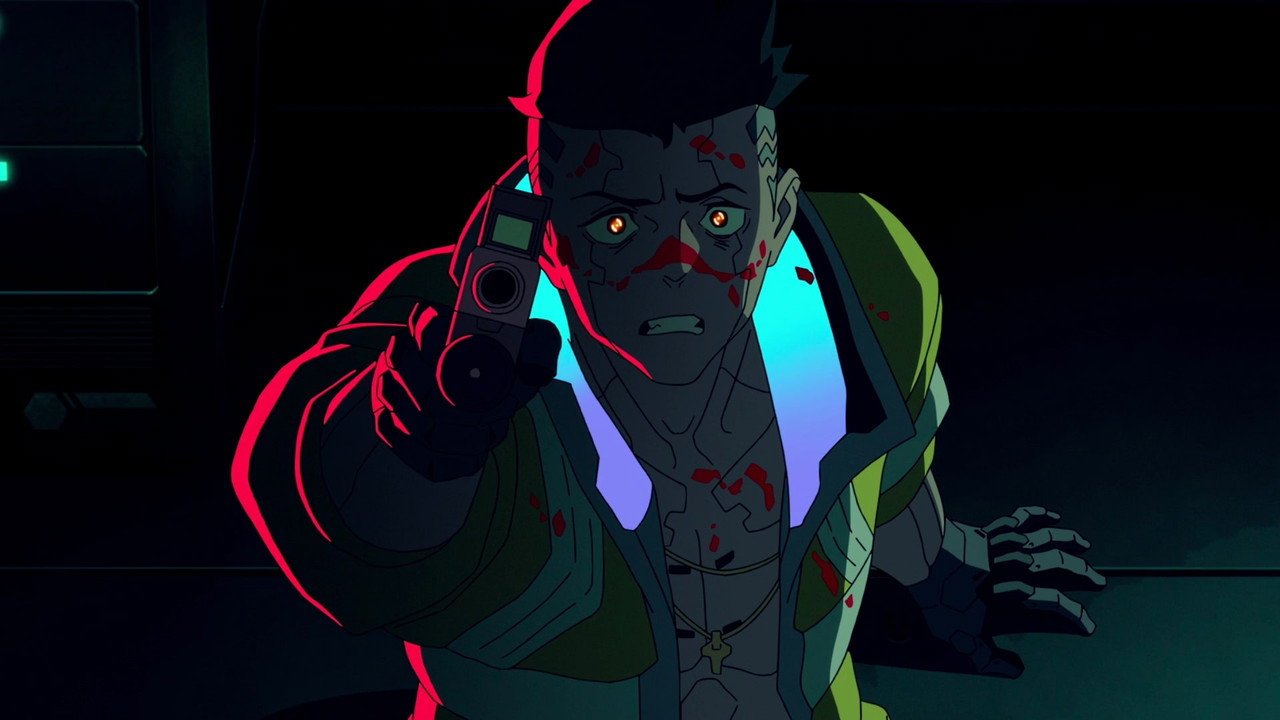
Cyberpunk: Edgerunners Season 2 works the same way, landing on a single day in October 2026 with a standalone ten-episode story. It never joins a season’s premiere weekend, because it was never part of a season. It was delivered as a finished product.
That is a genuinely different object from a weekly show, and it changes what tracking means. A weekly show needs a rhythm: a day, a time, an expectation of conversation. A batch drop needs neither. It needs about five free hours and a decision. If your system runs on “new episode Tuesdays,” a batch drop either arrives as a surprise or gets absorbed into a week that already looked full.
The mixed part is the hard part. Crunchyroll’s Fall 2026 slate is almost entirely weekly, so most of what you are tracking arrives one episode at a time on a fixed day. Netflix’s arrives whole, on arbitrary dates, several times a year. Two release philosophies running in parallel, both described by the word “premiere.”
When Dates Move and Nobody Announces Why
Every so often a date you have had in your calendar for months simply evaporates. On September 8, 2026, the Junket Bank anime was announced for an October 5 premiere. Then the official site pulled it. The postponement notice cited video production scheduling issues and gave no new date at all.
That is the pattern. An announced date is provisional until the first episode exists, and a lot of anime problems only become visible at the very end, when a specific run of shots turns out too expensive or a subcontracted studio misses a delivery. The official statement will never tell you which. “To further enhance quality” and “video production scheduling” are the two most common phrases, and both mean the same thing to you: the date is gone.
The other kind of movement is quieter, because it never gets an announcement. A show listed as premiering “in October” turns out to be the 21st. A cour date gets a month and then, three weeks later, a day. A dub schedule slips a week via a forum post instead of a news item. None of these are secrets; they just do not generate headlines, so the information never reaches the people who built a plan around it.
Which means: if your system depends on a date you learned in June, you are running on a stale fact. Re-checking is not a nicety here. It is the job.
When Seasons Are Years Apart

Black Clover Season 1 finished in 2021. Black Clover Season 2 premieres in October 2026. That is not a delay, exactly. It is the normal consequence of a very long story being adapted at the pace a weekly TV slot allows, which means the gap between seasons is now a scheduling fact you plan around rather than an exception you complain about.
Long adaptations create a different kind of confusion. A five-year gap means the manga has moved on, the staff has changed, and the story you remember is not the story you are picking back into. It also means the “new season” being advertised might be the middle of an arc with no label telling you where the arc begins. For a new viewer, Black Clover Season 2 requires 170 episodes of groundwork first.
The Apothecary Diaries has the same shape at smaller scale: a 24-episode season split across a six-month gap, following two previous seasons of 24. Four years of story delivered in a structure that never offers an obvious place to start.
Long-form adaptations are the strongest argument for tracking by story rather than by season number. If your list records “next episode to watch” instead of “next season to start,” a five-year gap stops being a research project and becomes a two-click resume.

The same logic works in the other direction, for shows announced far enough out that a gap is not the problem yet. Frieren: Beyond Journey’s End has a third season scheduled for October 2027, which is close to ideal from a tracking perspective: a month, a year, and a format you already understand. A date that specific and that distant is rare, and it is worth filing early precisely because it costs nothing to hold and everything to have forgotten.
The Movie Sitting Inside the Season
The Apothecary Diaries now has a film in Japanese theaters in December 2026, arriving while the first cour of Season 3 is still on the air. Ask four people when Season 3 ends and you get four answers: December, when the cour closes; April, when cour 2 airs; the 11th, when the movie opens; and “soon,” from whoever only saw the trailer.
This is less a marketing trick than a structural reality. When a franchise is valuable enough, the committee fills every window: theatrical film, cour 1, cour 2, special, recap. A TV database models a season as a range of episode numbers inside an airing period, and a film does not fit that model. It has no episode numbers in the sequence, and it may not be on your service at all.
So treat theatrical releases as separate events with their own region, never as episodes. The Apothecary movie is a Japanese theatrical run first, which means it is not simultaneously on your streaming service. Sekiro: No Defeat had the same shape in reverse, playing Japanese theaters in September 2026 before being rebuilt as a television series for January 2027, with Crunchyroll taking it worldwide outside Japan, China, Korea, Russia and Belarus. Different format, different platform, different region, different date. Same story.
Region Locks Are Part of the Schedule
The phrase “October 25” rarely means the same thing in two countries. My Happy Marriage’s three episodes are a worldwide Netflix drop, which is unusually clean. The One Piece is a Netflix exclusive, also worldwide. Sekiro is worldwide on Crunchyroll except for five named territories. Simuls, as usual, are regional by default, which is why lineup posts carry a standing disclaimer that dates reflect new subtitled premieres only and dub dates come later.
That disclaimer is doing a lot of work. A subtitled premiere date is not your date if you watch dubs, and dub dates get announced separately, weeks later. The Exiled Heavy Knight premiered in subtitles on July 2 and in English dub on July 16. Same show, same platform, two-week spread. If you are avoiding spoilers, the sub date is the one that matters and the dub date is the one that will get you spoiled.
Availability also changes after a season ends, and sometimes during one. Netflix rotates catalogue titles out of regions, and a show that was on your service in October can be gone by episode nine. For a batch drop especially, “watch it now” is an instruction rather than a slogan.
Write the region into your list. A date with no region attached is not a schedule entry, it is a hope.
What Actually Changed
None of this is a complaint about anime being badly run. It is what happens when three different production models end up sharing one word.
First, committees stopped structuring seasons around story arcs and started structuring them around windows. A split cour is, at bottom, a way of keeping a committee’s calendar full without paying for a third cour. The Apothecary Diaries shape is a good show with a good adaptation attached to a schedule that needs to fit three separate events — two TV blocks and a film — into one year.
Second, platforms that receive finished seasons do not care about cour boundaries. Netflix can commission seven long episodes and drop them on a Tuesday in February, because nothing in its business needs a broadcast week. That does not make the model wrong. It makes “premiere” mean two unrelated things depending on which logo is on the poster.
Third, international viewing turned airing time into a negotiation. A show that airs at 1:35 a.m. in Japan cannot be simulcast live for most of the planet, so platforms pick a regional hour and leave the Japanese slot to Japan. The 25:35 notation is the visible artifact of that compromise, and once you can read it you stop treating a time as nonsense.
The old calendar was a broadcast artifact: three-month blocks, roughly twelve episodes, one a week, roughly the same day everywhere. It was simple because television was simple. Streaming removed every one of those constraints and the industry never rebuilt a shared format to replace it. So we track shows one at a time, and the tracking is the work.
How To Read a Release Announcement Properly
Every announcement you will see for the rest of this year is missing at least one of six fields. Read for the ones that are present, and treat the rest as unknown rather than as fine.
Format. Season, second season, cour, special, OVA, film, remake, recap. If it says “season” and lists fewer than ten episodes, it is not a season. If it names two dates six months apart, it is a split cour. If it says “special,” write down how many episodes and whether they all arrive at once.
Premiere date. Note where the date came from. An official site and a fan tracker are not the same authority, and the fan tracker got there first more often than you would like.
Release model. Weekly on a named day, batch on a named day, or weekly with no day announced. That decides whether you need a reminder or a free evening.
Platform and region. Which service, which territories, which language tracks, and whether the dub date exists yet. If a release is exclusive to one service, that is a fact about availability, not a recommendation.
End date or run length. The most-often-skipped field, and the one that stops you mistaking cour 1 for a whole season. “26 episodes” is worth more than a premiere date.
Last update date. Treat anything older than a few weeks as provisional. Junket Bank had a date for a while and then had nothing.
If four of those six are present, you can plan. If two are, you can note it and move on without rearranging your week.
The Tracking System
Here is the setup. It is deliberately boring: five fields per show, three rules.
Five fields: title, format tag, next event date, platform, region. The format tag does the heavy lifting — S1, S2, S3-C1, S3-C2, SP, MOV. A split cour is two rows from the day it is announced, not one row you mean to fix later. A special is one row with the episode count in it. A movie is one row marked theatrical, so you do not go hunting for it on your streaming service.
Rule one: the next event date is the next thing that happens, not the premiere. For a weekly show that is the next episode. For a batch drop it is the drop day. For a finished cour it is the next cour’s date, or “unannounced,” which is a valid and common value worth its own row, because it is how you notice a show has gone quiet.
Rule two: re-check the week of the premiere, not the week of the announcement. Date movement clusters at the end of a production cycle, which is exactly when you would have stopped paying attention. Any date you learned more than a month ago is a hypothesis.
Rule three: cap your simultaneous premieres at three. Not three total — three in the same week. Everything else moves to a backlog with a month on it. This is the only rule that solves the real problem, which is not that the calendar is confusing but that a calendar of forty simultaneous premieres is indistinguishable from no calendar at all. The upcoming releases page is the fastest way to see what is actually stacked, and the seasonal anime guide over on Otaku is better for working out what a format means before you commit to it.
Two more habits worth keeping. Keep a separate short list of batch drops, because they need a decision rather than a reminder and will otherwise be lost between weekly shows. And put anything that has gone more than a year without news into a parking lot with no expectations attached, because a large share of those come back with no warning, and treating them as dead weight is how you miss them.
None of this is complicated, and none of it requires a better website. It requires reading a release as six separate facts instead of one. Do that and October is not chaos. It is a split cour, a special, a premiere, a delay notice and a movie, five different things wearing the same coat, each with a date you can actually plan around.
When you want a second opinion on whether a format suits how you actually watch — batch or weekly, dub or sub, seasonal or parked — that is what AniPick is for, and Otaku will happily argue with your queue. You can also sort out the platform split in our streaming guide before you commit, or go hands-on with a given series’ characters through RolePlay.