
Some anime characters become popular. A smaller group becomes recognizable. A very small group becomes a visual shorthand — the kind of character whose white hair and sunglasses you can spot in a single frame even if you’ve never seen the show. Satoru Gojo from Jujutsu Kaisen is the rare case who jumped from recognizability to genuine cultural saturation, and the numbers say it wasn’t close.
At the end of 2023, Crunchyroll ran a worldwide poll asking fans who their anime crush of the year was. Gojo took first place with 1,075 votes — nearly twice the runner-up, Spy x Family’s Yor Forger, who landed at 609. Jujutsu Kaisen dominated the rest of the ranking. In a poll fielded across multiple regions with thousands of responses, one character pulled nearly twice the votes of the next contender.
The impressive part isn’t the win. It’s that Gojo didn’t have a massive amount of screen time in that voting year. Season 2 focused on the Hidden Inventory arc and the Shibuya arc, periods where Gojo is either a teen or sealed away for a huge stretch. Yet he still swept a worldwide popularity poll. That tells you his fame runs deeper than screentime — and that’s the story worth unpacking.
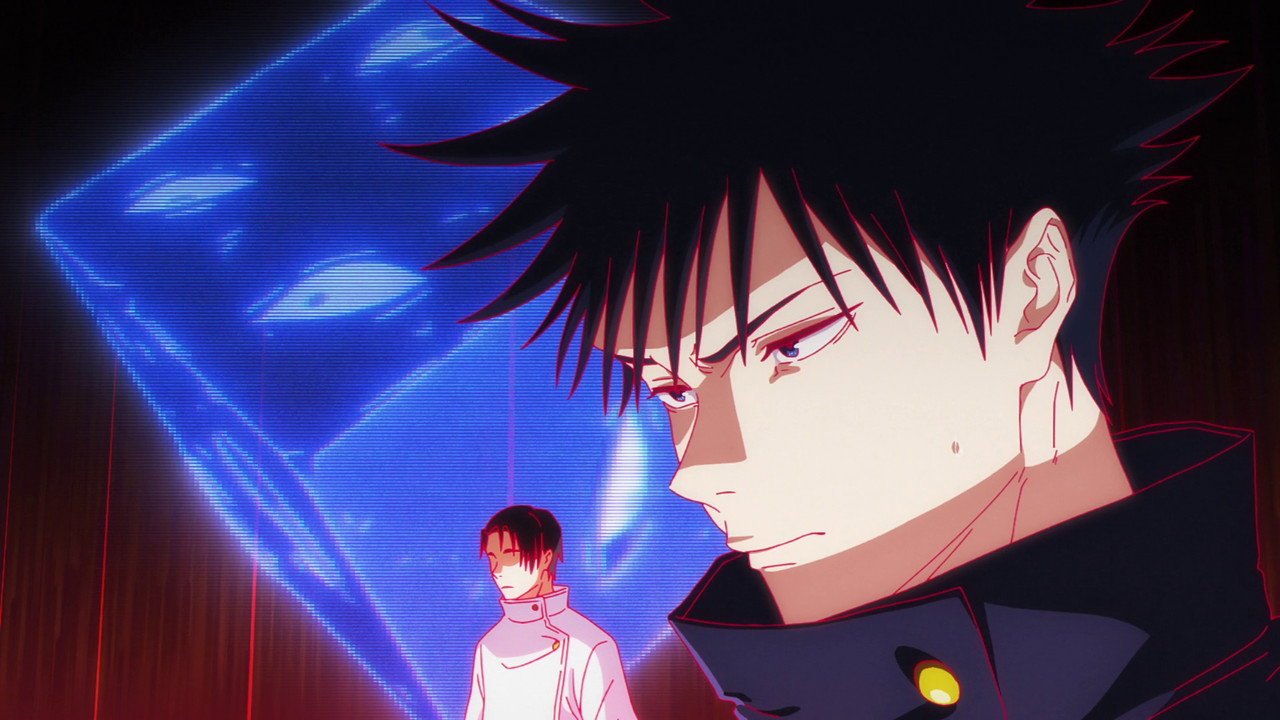
The Visual: You Know Him Before You Know Him
Before any plot point lands, Gojo wins on design. Tall, lean, with white hair that could be young or ageless, his face hidden behind a black blindfold or round shades, dressed mostly in black. In a cast of sorcerers who communicate their threat level through posture and jumpsuits, Gojo is the one who looks like he’s on his way to somewhere better.
That silhouette is the reason his fans can pick him out of any crowd scene, on a poster, or in a reaction image. Anime News Network and countless fan analyses have noted that his design leans on the classic bishounen template — the beautiful man archetype — but then twists it: he’s beautiful and the strongest person in the room, and the two facts are never played as opposites. The blindfold does a specific job. It hides his eyes — the windows of normal vulnerability — while making it ambiguous whether he’s relaxed, watching everything, or insulting you. Gojo’s eyes are the Six Eyes, an ability that lets him perceive cursed energy in detail most sorcerers can’t, and covering them costs him nothing.
The visual package is why he works in the span of a single image. The 2023 crush poll results, covered by Dexerto and Screen Rant alike, were full of references to his aura and his phase. But the deeper win is that the design never betrays the character: he looks effortless because he largely is. That promise is what the rest of the show has to keep.
The Power: Trouble Understood, Strength Not
Gojo’s standing in the world of Jujutsu Kaisen is basically a plot device that’s earned its place. He’s born with the Six Eyes, a rare inherited trait that gives him almost unfair perception of cursed energy. His technique, the Limitless (Infinity), is inherited too — but he’s the first wielder in centuries who can actually activate it fully, because the Six Eyes and the technique were meant to work together.
What that means in practice is a fighter whose kit looks like a physics problem’s answer key. He can create a barrier of infinite space between himself and an attacker, so a punch aiming at him can never actually arrive. Around that core, he builds applications: Blue, which pulls things toward him with the force of an artificial singularity; Red, which repels with equal violence; and the combos you might know from the famous domain expansion scenes.
The point of all this isn’t really the technical explanation — it’s what the strength does to the story. Gojo being invincible is the reason Jujutsu High functions as a stable institution. When he’s around, the curses know it, the higher-ups know it, and the students know it. That’s also exactly why the villains’ plan in the Shibuya arc involves trapping him rather than fighting him. The single strongest character on the board has to be neutralized off-screen for the plot to have tension.
What’s refreshing is that the author, Gege Akutami, holds Gojo’s strength and his limits in the same hand. His power doesn’t make him arrogant in the way you’d expect; it makes him genuinely certain, which reads differently on screen. He’s not the strongest because he trained harder than everyone. He’s the strongest because of a combination of birthright and genius, and the story never pretends that’s fair.
A Tragedy Disguised as Charisma
Here’s the hinge of Gojo’s popularity: the Hidden Inventory arc. In the anime, it comes as the first half of Season 2, framed as a flashback story about a younger Gojo before Jujutsu Kaisen’s present-day timeline. That arc is where “the strongest” becomes “a person.”
The arc introduces Suguru Geto, Gojo’s best friend and fellow special-grade sorcerer, and the two of them are a nearly perfect pairing — then a job protecting a young girl goes wrong, and the foundation cracks. By the end of the flashback, Geto has defected, Gojo has watched the girl they were sent to protect die in his arms, and the audience understands how a cocky kid became the strangest loner in modern sorcery. The Crunchyroll Anime Awards, which named Jujutsu Kaisen: Hidden Inventory/Premature Death its Anime of the Year in 2024, gave its Best Supporting Character award to Satoru Gojo — a sign that even the show’s own achievements kept revolving around him.
That’s the key to Gojo’s staying power that a lot of the “overpowered character” criticism misses. His pain is shown, not narrated. The show demonstrates, in one arc, exactly what it cost him to be as strong as he is — and the answer is friends, innocence, and stability. After that, every present-day scene of Gojo smiling at his students carries an undertone the audience can read.
His voice actor Yuichi Nakamura has said he doesn’t fully understand the character’s popularity, which is both funny and telling — the disconnect between the character’s own self-understanding and the audience’s reading is part of the appeal. We see a man who thinks he’s fine, and the audience knows what it cost him. That asymmetry is where the emotion lives.
The arc also gives Gojo the single most famous fight of his filmography: the confrontation with Toji Fushiguro. Toji is the ultimate counter to Gojo’s entire identity — a man with no cursed energy, invisible to the Six Eyes, who catches the “unbeatable” sorcerer off-guard and nearly ends him. It’s the first time the show lets its strongest character lose, not to a rival who’s stronger, but to a setup that exploits how he thinks. The revival moment that follows isn’t just a power-up; it’s Gojo choosing to be angry in a way the franchise rarely lets him be. For a character whose default mode is breezy confidence, that short burst of genuine resentment is worth a hundred shouting matches.
The Mentor Who Actually Believes In Them
There’s a quieter reason Gojo won the crush poll and kept winning the internet’s heart, and it’s exactly the reason his own cast keeps winning fans: he’s genuinely, uncomplicatedly good to the people under him.
In a genre where authority figures are usually scheming, cold, or secretly villains, Gojo is the mentor who protects his students without negotiations. He takes in Yuji Itadori on the basis that the kid deserves a chance, reassures Megumi and Nobara that their growth matters more than heir status, and treats the whole class like a group he chose rather than a duty he was assigned. When higher-ups make absurd demands, his response is to be inconveniently powerful about it. When the team needs a joke or a distraction, he provides it. The students, in turn, mirror that trust back at the audience, which is how a character earns a fanbase: not by being cool, but by making the people around him look cared-for.
That’s also why the tragic part lands so hard. The same man who jokes with teenagers and performs surprise visits is the one whose past reads like a series of farewells. He’s cheerful because he knows what distance does to people. The two halves of his character — the sunshine and the girl he could not save — aren’t competing versions; they’re cause and effect.
Why He Broke Out of the Series
Gojo’s fame isn’t just contained in Jujutsu Kaisen’s own walls. He’s crossed into the general internet’s vocabulary in a way few anime characters from the last decade have.
The “Nah, I’d win” line, which comes from chapter 221 of the manga, became a meme with a life of its own — quoted, parodied, and ironically applied to anything from lose-only fights to household chores. The domain expansion hand gesture — hands cupped, two fingers and a merged cloud of sign-language symbols — got imitated in real-world videos. Gojo reaction images, birthday posts, and “movie night” thirst edits were staples of anime social media through 2023 and 2024.
Part of that is circumstance: Jujutsu Kaisen was the biggest anime of 2023 by awards and viewership, and Crunchyroll noted it broke voting records at the 2024 Anime Awards, with the series walking away with 11 trophies including Anime of the Year. A character from the year’s most visible show gets outsized visibility by default. But Gojo is one of the few “cool guy” characters who made the leap twice — first as a meme, then as a genuinely beloved figure whose fate in the manga got covered like breaking news by anime and manga outlets worldwide.
There’s also a specific split that explains his particular version of fame. In Japanese fan polls, characters like Megumi Fushiguro often ranked higher — Gojo’s runaway popularity was, by several accounts, an international phenomenon more than a domestic one. That fits the reality of how he reads to Western audiences: a character whose charm is visual, his confidence readable, with a dramatic tragedy that translates through arcs without needing to know cultural nuances. He sits perfectly in the space of a character you can explain to a friend in one sentence — “the strongest sorcerer, but he’s secretly lonely” — and that’s why a single frame of him can circulate on its own.
The Narrative Price of Being the Strongest
It’s worth being clear about the other half of Gojo’s arc, because a lot of his fame is tied to what the story does to him. Being canonically the strongest in Jujutsu Kaisen is not a reward; it’s a punishment the series engineers for dramatic reasons.
Over the course of the story, Gojo loses his best friend, is sealed inside the Prison Realm for nineteen days of the present-day timeline, deals with the fallout of Suguru’s defection for years, and eventually faces consequences that split fandom down the middle. The author has been open that Gojo’s power level exists partly to make the rest of the cast’s development necessary — if the strongest could solve every problem, there’d be no reason for the students to grow.
That structural honesty is part of why fans defend him so fiercely. His charisma buys the show the chance to do something rare: make you worry for the strongest character in the room. When he fights, even fans who know the outcome sit slightly tense, because the story has proven it’s willing to hurt him. He spends less time being cool and more time being proof that nothing in Jujutsu Kaisen stays comfortable.
For audiences, that combination — an essentially unbeatable character who is also emotionally damaged and, crucially, never “fixed” by his strength — is exactly the terrain modern shonen fans have learned to love. Solo Leveling’s Sung Jin-woo ascended to power and enjoyed it. Gojo has power and endures it. Both are popular, but they’re beloved for opposite reasons.
The Whole Picture: Charisma, Tragedy, and a Great Fit
Gojo’s popularity isn’t a marketing accident, and it isn’t just a beautiful-design quirk. It’s a combination that happened to line up unusually well:
- A visual that reads instantly and universally
- Power that’s explained in the story and still leaves secrets
- A tragedy that’s demonstrated in one core arc, making everything after it carry weight
- A personality that’s deliberately unserious, which makes his serious moments hurt more
- A breakout year, 2023, where his show won nearly everything
The last point deserves a little emphasis. Gojo’s big moments were perfectly timed. Season 2’s hidden-inventory flashback aired right as the anime’s global audience peaked, so the people who loved his present-day persona got to meet his younger, more fragile self just as his story went viral. When the Crunchyroll crush poll went out a few months later, the emotional investment was already banked.
And the character’s hold hasn’t loosened since. Even after the manga’s most controversial moments, Gojo remained the face of the franchise — in merchandise, in poll after poll, in the kind of fan communities that turn a series into a scene. When a character’s passing gets news coverage and his return from a nineteen-day seal becomes a spoiler embargo, he’s not merely popular. He’s infrastructure.
If You Liked Gojo, Here’s Where to Go
If Gojo is your favorite part of Jujutsu Kaisen, you’re not alone — and the good news is that the “charismatic, powerful, secretly burdened mentor figure” lane has more than its share of entries.
Levi Ackerman from Attack on Titan is the closest spiritual cousin: ultra-capable, deadpan, quietly haunted, and perpetually surrounded by people he protects better than he protects himself. Kakashi Hatake from Naruto is the older template — the genius mentor who reads as lazy and is secretly carrying real losses. If you want the more modern take on a protagonist who’s overpowered but pays for it, Solo Leveling and the various villain-reincarnation series give you the power fantasy version of the same equation.
For something that never leaves the comfort zone, the fan-favorite stretch is where Gojo overlaps with the “cool uncle” archetype — think Seto Kaiba’s confidence without the tsundere edge, or the heavy hitters of your favorite battle-sports anime. The point is less the exact match and more how you want your power delivered: as a fantasy to climb toward, or as a burden to watch someone carry.
That’s a distinction the Anime Array toolset is actually good at helping you with. Otaku AI can walk you through which of those two readings you enjoy more, and AniPick can translate your answer into a stream of picks instead of a generic list. If you’d rather get hands-on, the RolePlay side of the site lets you actually sit across (or face) the kind of character you’re analyzing — a couple of conversations with a confident, secretly-vulnerable persona is worth more than any character study when you’re trying to feel what makes the archetype work.
The Fandom That Carries Him
Gojo’s popularity isn’t only an in-show phenomenon; it’s a fanbase behavior pattern. His visually expressive, constantly-meme-able nature gave the community extremely reproducible material, and fan communities reward that.
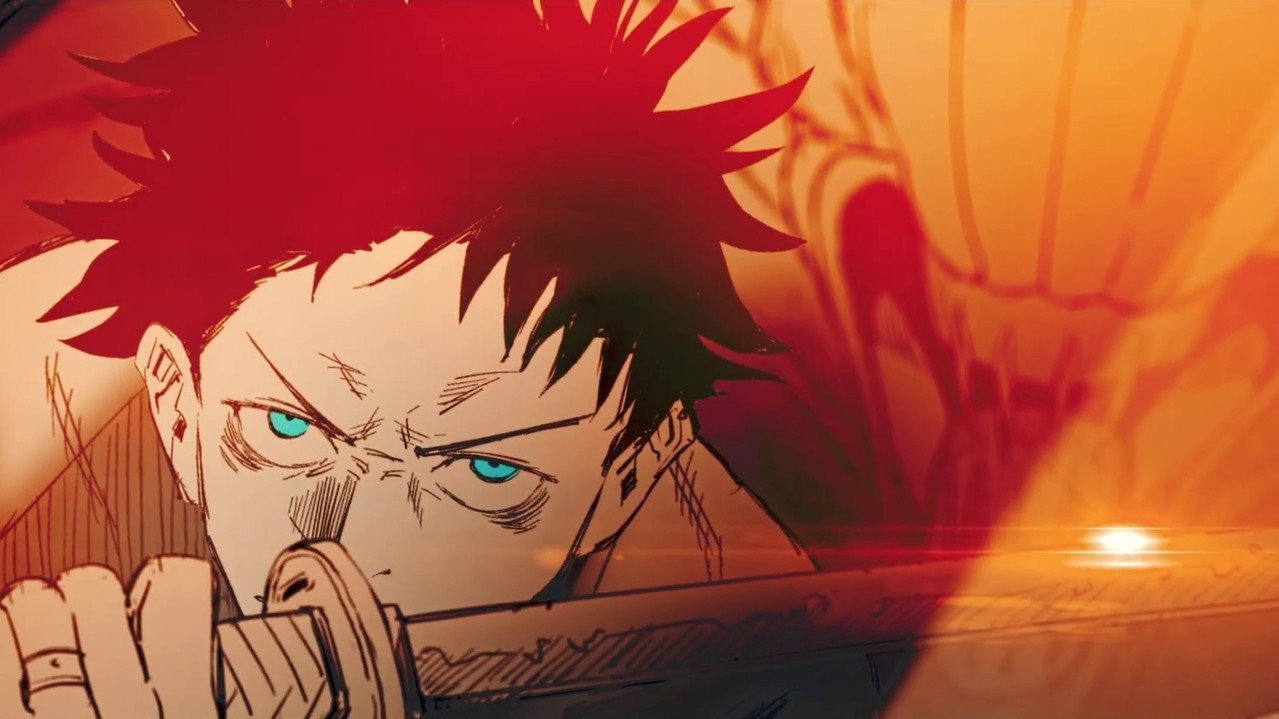
Look at the fingerprints. “Nah, I’d win” traveled because it works as a self-contained joke — the character says something absurdly confident, and the punchline is that he’s usually right, so the meme works whether you’ve seen the show or not. His domain expansion gesture is drawable, repeatable, and distinct enough to be recognized across time zones. His birthday is one of the few anime-character birthdays the general internet reacts to with coordinated fan projects, moodboards, and edits. Then there’s the smaller stuff: the figurines, the cosplay, the million pinned-reaction variants. When a character generates that much material, the fanbase starts maintaining his relevance on its own, independent of what the story is doing at any given moment.
That’s the difference between a popular anime character and a cultural reference point. Plenty of beloved characters are loved inside their fandom. Gojo got loved in the wider one — the people who never finished Jujutsu Kaisen still know his face, his line, and his whole vibe. That’s a level of penetration the franchise didn’t even plan for; it’s the sum of the design, the tragedy, and the timing compounding on itself.
None of that happens by accident, and it’s worth remembering that this pattern — a character becoming bigger than their own story — is exactly what pop culture does with its favorite archetypes. It happened to Kakashi before Gojo, to Levi after him, and it will happen to whoever’s next. But almost nobody does it as cleanly as Gojo did, because almost nobody pairs that much charisma with that much demonstrated pain and gets the timing this right.
Shibuya: The Cost of Being the Strongest
The Hidden Inventory arc makes you care about Gojo. The Shibuya Incident makes you understand what being him actually costs. Together they’re the two halves of his legend, and Shibuya is the one the meme posts don’t prepare you for.
Shibuya is where every promise of Gojo’s invincibility gets tested at once. The arc starts with a massive coordinated assault on Tokyo, engineered specifically to separate Gojo from the rest of the cast and funnel him into a trap. The walls close in not by defeating him — nobody can defeat him directly — but by exploiting the one weakness any overwhelming force has: its leverage. The arc uses his students, his allies, and an ancient cursed object to force him into position, and when the moment comes, he’s removed from the board not by a loss in combat but by a sealed box built centuries earlier for people exactly like him.
What makes Shibuya essential to his popularity is the tone shift. The same season that opens with the playful Hidden Inventory flashback ends with Gojo separated from the story for the rest of the arc, and the series correctly treats that separation as a loss. Fans spent months arguing, theorizing, and counting down his return. When he does come back in the manga, the discourse around the reveal swallowed anime social media for weeks. A character who can make you miss him that much, purely by being absent, is not popular because he’s on screen. He’s popular because his absence matters.
That’s the structural trick worth understanding about Jujutsu Kaisen’s best character: his greatest contribution to his own popularity is the way the story is designed around him even when he’s not in it. The powers, the design, and the tragedy all earn the love. But the disappearance is what turns love into anticipation, and anticipation is what keeps a franchise’s most recognized face at the center of the conversation.
The Bottom Line
Satoru Gojo won a worldwide popularity poll by a landslide, carried a series that won Anime of the Year, and became a meme, a mood, and a mascot in roughly twelve months — all without dominating screen time. The reason is that his appeal never once relied on being on screen. He’s built from parts that work even in a single screenshot: a design with instant readability, a power system that gives his invincibility a reason, and a tragedy that’s shown early and never forgotten.
Strip away the hype and what’s left is a genuinely great character construction — one that a lot of future battle manga will spend years trying to replicate. And if the copycats flood in, they’ll have one problem Gojo never had: they’ll be trying to manufacture what he made look effortless.